What Is Stimming? A Simple Guide to Understanding Sensory Needs
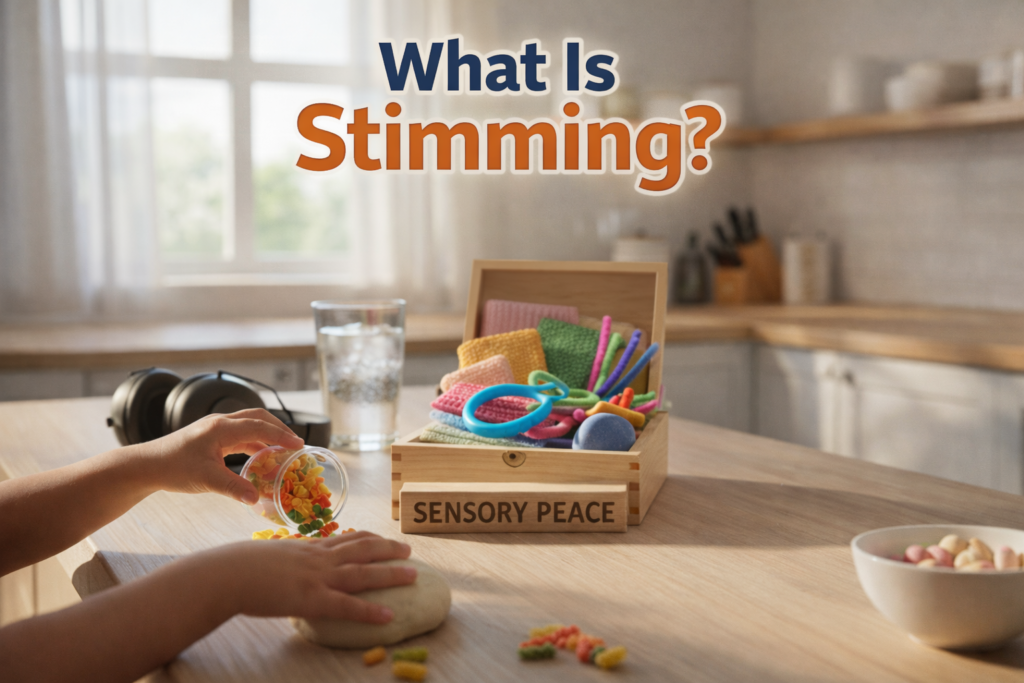
If you have spent any time in the autism community, you have likely heard the word “stimming.” To an outsider, these repetitive movements or sounds might look unusual, but in our village, we know they are a vital part of how our kids navigate and process the world around them.
As a special education teacher and a mom to two autistic boys, I’ve seen firsthand that stimming isn’t a behavior that needs to be “fixed” or hidden. It is a language of regulation and a window into how a neurodivergent brain is feeling.
Why Do Autistic People Stim?
Stimming (short for self-stimulatory behavior) is essentially the body’s way of balancing its own sensory system. It serves several critical purposes:
- Sensory Regulation: It helps manage “sensory overload.” When a room is too loud, too bright, or too crowded, stimming provides a predictable sensation to focus on.
- Emotional Expression: It’s often a physical release for “big feelings.” You might see it during intense joy and excitement (happy stims!) or during times of deep frustration and anxiety.
- Focus and Grounding: For many, the rhythm of a stim helps them concentrate on a difficult task or simply feel grounded in their own body when they feel “disconnected.”
What Stimming Looks Like In Our House
Stimming looks different for everyone. Even within the same family, the “how” and “why” can vary wildly based on a child’s unique sensory profile.
N’s Journey: Pacing and Patterns
My son N has always been a “mover.” At 18, his primary way of regulating is pacing back and forth. It’s how he processes his thoughts, clears his head, and copes with unwanted noise. He also frequently requires noise-canceling headphones to handle loud sounds at school.
Back in second grade, N was in an inclusion class with a teacher who truly understood his needs. Instead of telling him to sit still, she gave him a dedicated spot in the classroom where he could pace whenever he felt the need. He still uses this rhythm today to stay regulated. Interestingly, when he was little, he used to line up his toys in perfect, meticulous rows—a visual stim that brought him a sense of order. I also remember he needed to be rocked constantly as a baby to be able to sleep. While he doesn’t need those things anymore, his pacing and headphones remain his go-to tools for regulation.
L’s Journey: High Sensory Needs
My son L has much greater sensory needs, and his stimming is a constant, beautiful part of his daily life. L seeks out intense sensory input to feel comfortable in his environment.
You’ll often find him rocking back and forth, spinning with incredible balance, humming a rhythmic tune, watching the spinning fan, or repeating lines from his favorite videos. He also has strong oral sensory needs, which leads to chewing on non-food items, like his nails or the collars of his shirts. One of his biggest “resets” is water; he loves the weight and warmth of it, often taking multiple baths a day to regulate his system. For L, these aren’t just “habits”—they are essential for his peace of mind.
Common Types of Stimming
If you’re noticing new behaviors in your child, they likely fall into one of these sensory categories:
- Visual: Staring at spinning objects (like fans), lining up toys, or flickering fingers near the eyes.
- Auditory: Humming, repeating favorite movie lines (echolalia), or making specific clicking sounds.
- Tactile/Oral: Rubbing specific fabrics, chewing on sleeves or “chewelry,” or hand-flapping.
- Vestibular/Proprioceptive: Pacing, rocking, spinning, jumping, or “crashing” into pillows.
A Neuro-Affirming Approach
In the past, many therapies focused on “extinguishing” these behaviors to help kids “look normal.” Today, we take a neuro-affirming approach. Unless a stim is causing physical harm to themselves or others, our goal shouldn’t be to stop it.
When we stop a stim, we are often taking away a child’s only way of coping with a stressful environment. Instead, we should ask: “What is this behavior helping my child achieve?” When we celebrate stimming as a tool for success, we show our kids that their way of experiencing the world is not just accepted, but valid and beautiful. ❤️
Every child’s sensory language is unique. Does your kiddo have a favorite way to stim that helps them feel regulated? Drop a comment below and let’s celebrate our kids’ unique ways of navigating the world!
Medical Disclaimer
I am a Special Education Teacher and a parent, but I am not a doctor, psychiatrist, or licensed medical professional. The information on this website is for educational and informational purposes only and is not a substitute for professional medical advice, diagnosis, or treatment. Always seek the advice of your physician or other qualified health provider with any questions you may have regarding a medical condition.
Affiliate Disclosure
To help keep Our Autism Village running, some links in this post are affiliate links. If you make a purchase through them, I earn a small commission which helps me continue creating resources for our community.
I know that seeing these behaviors for the first time can feel overwhelming. To help you navigate this, I’ve put together a free Stimming Toolkit available for immediate download.
Featured Village Resource

Our $5 Monthly Pass
Keep your autism toolbox full with a digital resource every month sent directly to your inbox.


My 32 year old son has very different ways of stimming. I never realized that these were forms of stimming but his Psych Tech told me they are. He changes clothes, mainly shirts, sometimes 15 or 20 times a day. He also must carry favorite items everywhere.
That sounds very familiar! My 16-year-old son takes 10 baths a day (minimum) and changes clothes just as often. It’s his way of seeking sensory input. As my boys have gotten older, I have also found that many things they do are considered stimming that I didn’t pick up on when they were little. Thank you for sharing!