Autism Milestones: Why “Small Wins” Are the Heart of Our Village
In the “typical” parenting world, milestones are often measured by standardized growth charts, school grade levels, or the loss of a first tooth. But inside our village, we know that the most profound growth for our kids doesn’t always happen out in the open at the same rate as other children.
For us, the real magic happens gradually in the routine of our daily lives. We celebrate wins that might seem “small” to an outsider but feel like a Super Bowl win for us. When we shift our perspective on autism milestones, we stop looking for “average” and start noticing the extraordinary progress happening right in front of us.
The Invisible Mountain of Communication
When we talk about a “small win,” we aren’t settling. We are witnessing months, if not years, of hard work. We are acknowledging the invisible mountain our children climb just to achieve a new skill.
Take my son, L. He has autism, an intellectual disability, and a communication disorder, so every inch of progress is hard-won. At 16, he is still learning to put sentences together. We celebrate every time he uses a longer sentence than usual or when he discovers an entirely new sentence structure. For a child navigating the complexities of communication, adding words to his go-to sentences isn’t just a linguistic shift—it’s a brand-new bridge to the world around him.
Another “small win” we celebrate with L is sleeping through the night. His insomnia is treated through medication, but it doesn’t always work well, especially when he’s going through a growth spurt. When L sleeps for 8 hours a night several days in a row, the victory isn’t just his; it belongs to the whole house. It’s the restoration of energy, the calming of the nervous system, and a signal that his body is finally finding its rhythm. These are the quiet nights that fuel our journey.
The Bravery in a Single Bite
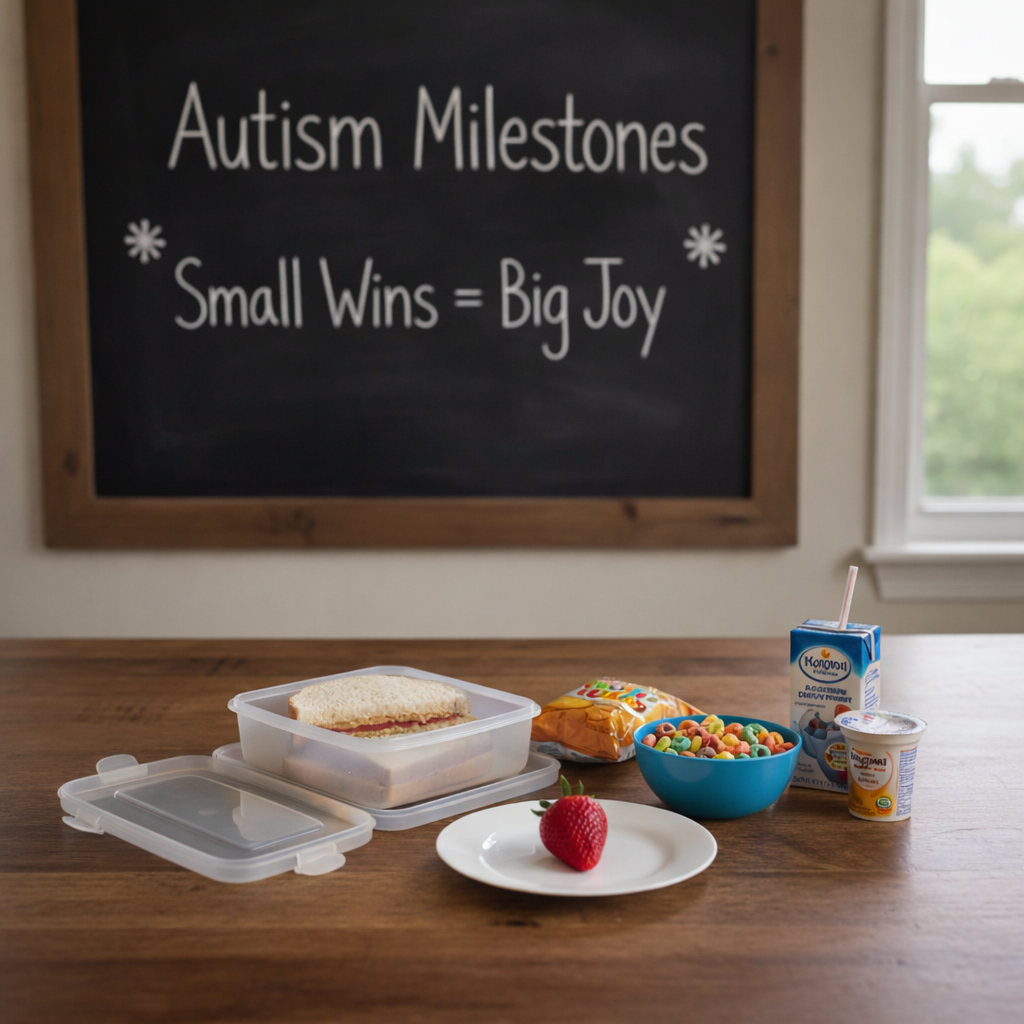
Then there’s our oldest son, N. He has texture issues, so it takes a lot of bravery for him to try new foods. N is 18 now, but he has been eating the same lunch since Kindergarten: a peanut butter and jelly sandwich, dry fruit loops, chips or pretzels, yogurt, a banana, and a nutritional supplement drink. This routine grounds him in an environment that often feels overstimulating for him.
But at home? He tries new foods, and occasionally, that food becomes a staple for him. That’s cause for celebration in our house!
Breaking the Comparison Trap
It’s so easy to look at social media and feel like your “village” is falling behind. You see a neighbor’s child hitting a traditional milestone and you feel a pang of “Why not us?”
But here is the truth: Our timeline is not their timeline. When we broaden our definition of autism milestones, we do three vital things for our community:
- Lower Collective Cortisol: We stop holding our breath waiting for a “big” event and start breathing through the joy of the present.
- Validate the Effort: We acknowledge that for our kids, a “small” step requires 10x the effort of a “typical” one.
- Strengthen the Village: By sharing these specific stories, we give other parents permission to be proud of their own “inch-by-inch” journey.
A Note to the Parents in the Trenches
If your win this week was simply getting through a meltdown with grace, or seeing your child smile at a cloud, or finally getting a 20-minute nap—that counts. In this village, we don’t judge the size of the victory. We just celebrate that you’re still moving forward.
Whether it’s an 18-year-old trying a strawberry for the first time or a child finding a new way to say “I love you,” these are the milestones that build a life worth celebrating.
What does a “small” win look like in your house? Drop your win in the comments so that we can celebrate with you at Our Autism Village!
Affiliate Disclosure
To help keep Our Autism Village running, some links in this post are affiliate links. If you make a purchase through them, I earn a small commission which helps me continue creating resources for our community.
Medical Disclaimer
I am a Special Education Teacher and a parent, but I am not a doctor, psychiatrist, or licensed medical professional. The information on this website is for educational and informational purposes only and is not a substitute for professional medical advice, diagnosis, or treatment. Always seek the advice of your physician or other qualified health provider with any questions you may have regarding a medical condition.
Featured Resource
Our $5 Monthly Pass Subscription
Keep your autism toolbox full with valuable digital resources sent to your inbox each month for only $5.