Navigating Your First IEP Meeting
From Intimated to Empowered
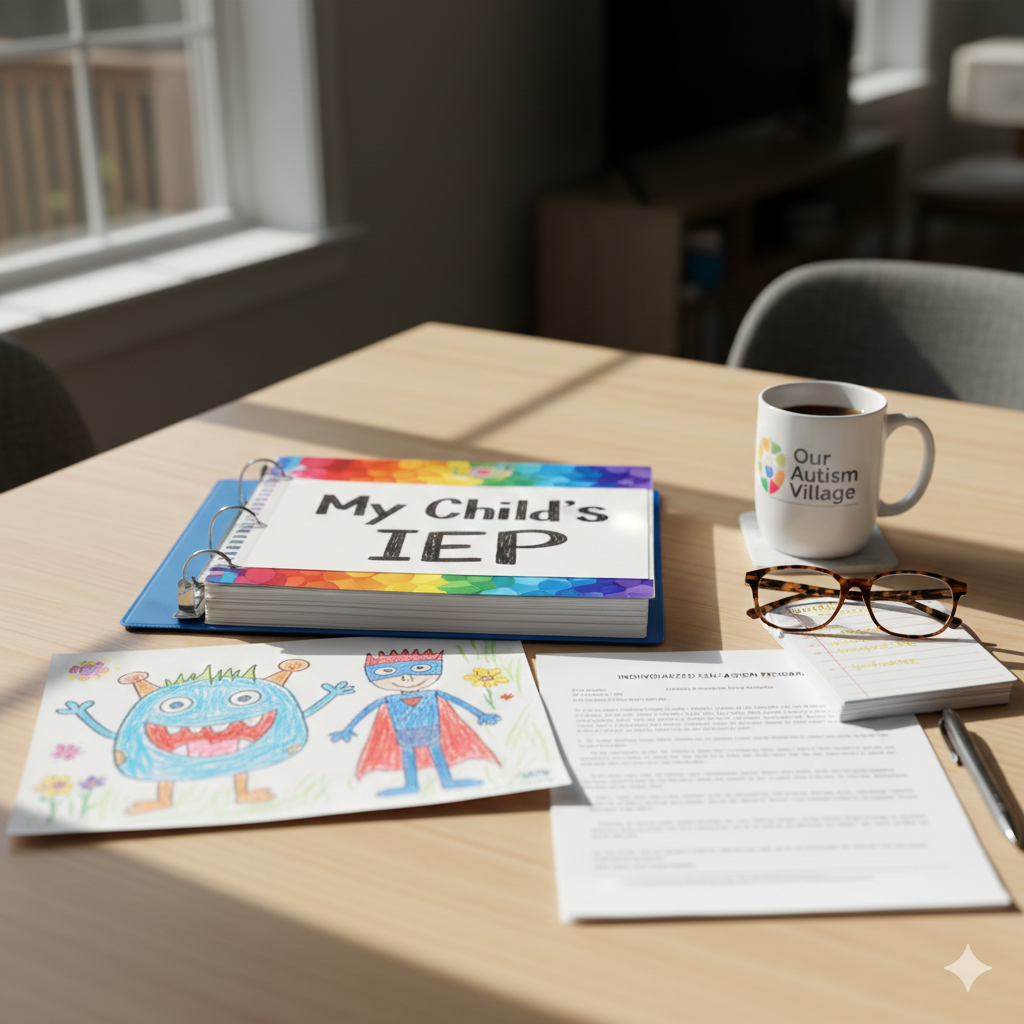
Walking into a room filled with “experts”—teachers, psychologists, speech therapists, and administrators—can make any parent feel small. The table is often covered in thick folders, standardized test scores, and legal jargon. This is your child’s Individualized Education Program (IEP) meeting, and while the school knows the law, you know the child.
The goal of an IEP is to ensure your child has a “Free and Appropriate Public Education” (FAPE) in the “Least Restrictive Environment” (LRE). But to move from a passive participant to a lead advocate, you need a strategy that begins before you even enter the building.
1. Preparation: The “Parent Report”
Don’t wait for the school to lead the narrative. Create a one-page “Parent Report” or “Vision Statement.” Briefly outline your child’s strengths, your biggest concerns for the year, and your long-term goals. Distributing this at the start of the meeting sets a collaborative tone and ensures your voice is documented from minute one.
2. The “Human First” Introduction
Before the meeting dives into raw data and deficits, re-center the room by introducing your child. Share a photo or a 30-second story. Mention their obsession with dinosaurs, their infectious sense of humor, or their incredible talent for puzzles. This simple act shifts the atmosphere; the team is no longer planning for a file number—they are planning for a human being with a personality and a future.
3. Focus on SMART Goals
The heart of the IEP is the goals. Vague goals lead to vague progress. Ensure every goal is Specific, Measurable, Achievable, Relevant, and Time-bound.
- The Wrong Way: “Johnny will act better in class.” (Who decides what ‘better’ means?)
- The SMART Way: “Johnny will use his communication board to request a sensory break 3 out of 5 times when feeling overwhelmed, as measured by teacher observation logs over the next 9 weeks.”
4. Understand Accommodations vs. Modifications
Knowing the difference is power. Accommodations change how your child learns (like extra time on tests or a quiet seating area), while modifications change what they are expected to learn. Ensure the “Supplementary Aids and Services” section is detailed. If your child needs a “fidget tool” or “visual schedule,” make sure it is written in the document, not just promised verbally.
5. The Power of “I’ll Think About It”
The pressure to sign the document on the spot can be intense. Remember: You do not have to sign the IEP the moment the meeting ends. It is a legal, binding document. It is perfectly acceptable—and often wise—to say, “Thank you for this draft; I’m going to take it home, read it over in a quiet space, and I will get back to you within [X] days.” This allows you to check for errors or missing services without the “hot house” pressure of the meeting room.
6. Bring a “Second Set of Ears”
Whether it’s a spouse, a friend, or a professional advocate, never go alone if you can help it. Having someone there to take notes allows you to focus on the conversation. They may catch a detail you missed while you were processing a difficult piece of data.
A Child-Centered Collaboration
By going in prepared, you shift the dynamic from a “school-led” meeting to a “child-centered” collaboration. You aren’t just a guest at the table; you are an equal member of the team. You are the expert on your child’s life, and your input is the most valuable data point in the room.
What helped you at your child’s IEP meeting? Let the Our Autism Village community know below!
Registered members receive exclusive access to members-only content, forums, downloads, and more.