5 Sensory-Friendly Home Hacks
Creating Your Home Sanctuary
Disclaimer: This post contains affiliate links. If you make a purchase through these links, I may earn a small commission at no extra cost to you. As an Amazon Associate, I earn from qualifying purchases.
Our homes are supposed to be our safe havens. They’re where we rest, reset, and feel protected from the outside world. But for an autistic child with sensory processing sensitivities, a typical home can feel anything but calm. What seems ordinary to a neurotypical nervous system—the hum of a refrigerator, the glare of an overhead light, the scratchy texture of a rug—can feel intense, even threatening.
When the sensory input becomes too much, a child’s body may shift into a fight, flight, or freeze response. That reaction isn’t misbehavior; it’s survival. The good news is that creating a more sensory-friendly home doesn’t require a full renovation or an unlimited budget. Small, intentional changes can significantly lower the overall “sensory load” and help your child feel more regulated and secure.
Here are five simple, realistic hacks to help turn your home into a calmer sanctuary.
1. The “Low-Light” Revolution
Lighting is one of the most overlooked sensory triggers. Fluorescent lights and cool-white LED bulbs often emit a subtle flicker that many people never notice—but autistic brains frequently do. This flicker can cause headaches, eye strain, irritability, or emotional overload.
Whenever possible, switch to warm-toned bulbs that produce a softer, more natural glow. Lamps are often better tolerated than overhead lighting, especially in bedrooms and living areas. If you’re dealing with unavoidable ceiling fixtures, fabric light filters—often used in classrooms—can magnetically attach to fluorescent panels and instantly diffuse harsh light.
Think of lighting as a way to set the nervous system’s tone. Softer light sends a signal of safety.
2. Create Visual Boundaries With Tape
Many autistic children struggle with transitions, spatial awareness, or knowing where they “belong” in a room. This uncertainty can increase anxiety and lead to dysregulation, especially in shared spaces.
A surprisingly effective solution is colored painter’s tape placed directly on the floor. For example:
- A blue square might mark a designated “play space”
- A green rectangle could indicate a quiet reading area
- A red line might signal “stop” or “do not enter”
These visual cues remove the guesswork. Instead of verbal reminders or corrections, the environment itself provides clear, predictable guidance. Painter’s tape is inexpensive, removable, and flexible—perfect for growing kids and changing needs.
3. Build a Compression Corner
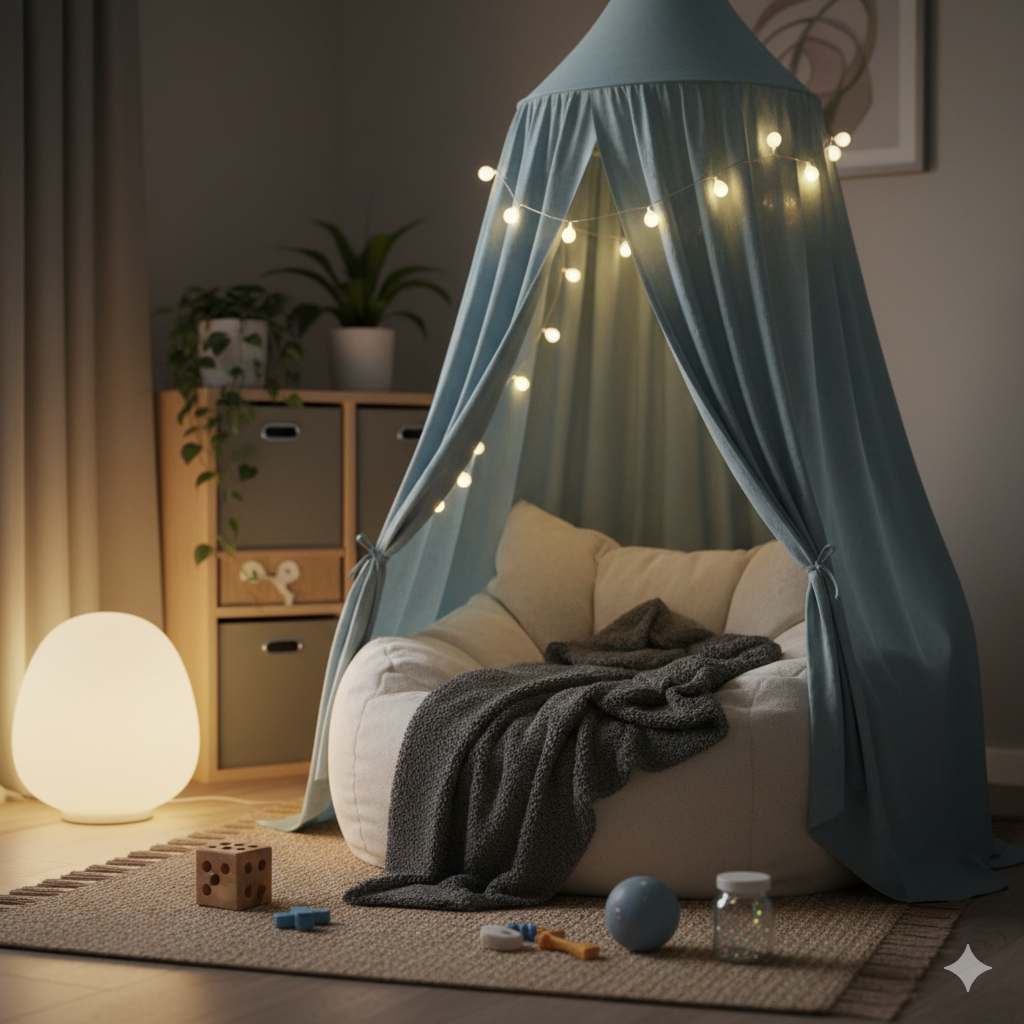
Sometimes, what an autistic child needs most is the sensation of being held. Deep pressure input helps calm an overwhelmed nervous system and can reduce anxiety, meltdowns, and emotional shutdowns.
A compression corner doesn’t need to be elaborate. A bean bag chair tucked into a corner, paired with a weighted blanket or lap pad, can be incredibly grounding. Some children also benefit from body socks, heavy pillows, or even tightly rolled blankets they can lean into.
This space should never be a punishment area. Instead, it’s a safe regulation zone—a place your child can choose when their body needs extra support.
4. Reduce Visual Clutter
Clutter isn’t just messy—it’s visual noise. When toys, books, and supplies are stored in clear bins or left out in the open, the brain is constantly processing colors, shapes, and movement. For a sensory-sensitive child, this can be exhausting.
Switching to solid-colored storage bins with simple labels can dramatically “quiet” a room. Rotating toys instead of keeping everything accessible at once can also reduce overstimulation. Fewer visible choices often lead to calmer, more focused play.
A helpful rule of thumb: if the room feels busy to you, it’s probably overwhelming to your child.
5. Establish Scent-Free Zones
Many autistic children are “super-smellers.” Strong scents from candles, plug-in air fresheners, perfumes, or cleaning products can be overwhelming and even nauseating. What smells “clean” or “cozy” to one person may feel suffocating to another.
Opt for unscented or naturally mild cleaning products, and avoid artificial fragrances whenever possible. If certain family members enjoy scented items, consider designating specific areas of the home as scent-free zones—especially bedrooms and quiet spaces.
Neutral air allows the nervous system to rest.
Start With a Small Change Today
A sensory-friendly home isn’t about perfection. It’s about intention. Each small change you make sends a powerful message to your child: You are safe here. Your needs matter.
Every autistic child is different, and what works for one may not work for another. Start with one or two changes, observe how your child responds, and adjust as needed. Over time, these small accommodations can add up to a home that feels calmer, more predictable, and more supportive—for everyone living in it.
You’re not just managing sensory needs. You’re building a sanctuary.
If you’re comfortable, you’re invited to share what helps your child feel safe at home. Even one small idea could help another family in Our Autism Village.
